
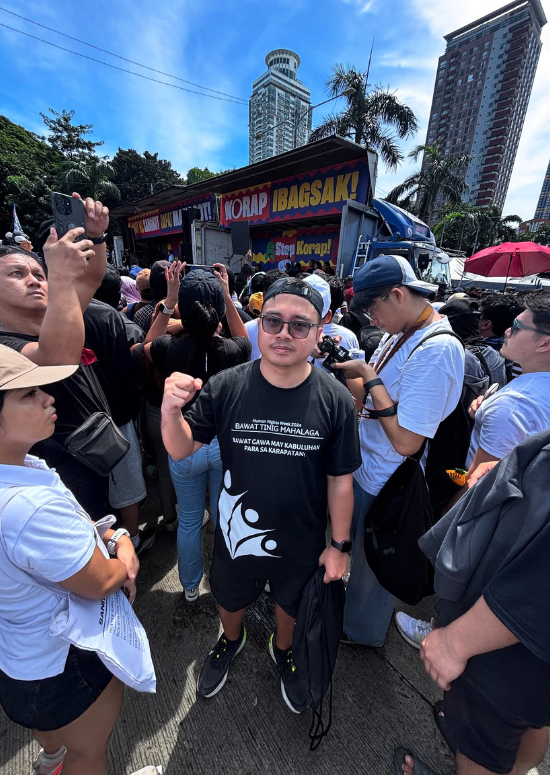
1. When did you first hear about the EDSA People Power Revolution, and how was it explained to you?
I first learned about the EDSA People Power Revolution in late grade school during our Araling Panlipunan classes. At that time, it was introduced as a significant historical event that restored democracy in the Philippines. I gained a deeper understanding of it in high school, when I learned that it marked a pivotal moment in our nation’s history, when the Filipino people peacefully overthrew a dictator and his authoritarian regime through a nonviolent uprising in Manila.
2. Does being called an “EDSA baby” mean anything to you? Why or why not?
Yes, being called an “EDSA baby” means a great deal to me. It signifies that I was born into a country that had already regained its democratic freedoms after a period marked by oppression, social injustice, and widespread human rights violations. It reminds me that I am a beneficiary of the sacrifices made by those who fought for our freedom.
3. Do you think growing up after 1986 shaped your views on democracy, activism, or being a responsible citizen?
Yes, growing up after 1986 has greatly shaped my views on democracy and responsible citizenship. It taught me that in a democratic country like the Philippines, true power ultimately belongs to the people, not to political elites who believe they are above the law. It reinforced my belief that good governance requires accountability, transparency, and respect for freedom of expression. Citizens must be free to voice criticism and demand accountability from their leaders. Democracy thrives when no one is above the law.
4. How do you see Ferdinand Marcos Sr. and Cory Aquino’s impact on your generation’s political awareness?
The administrations of Ferdinand Marcos Sr. and Cory Aquino serve as contrasting lessons in governance for my generation. Marcos Sr.’s rule highlighted the dangers of authoritarianism and the abuse of power for personal and political gain. In contrast, Cory Aquino’s leadership symbolized the restoration of democratic institutions and people-centered governance. Together, these periods in history have deepened our awareness of the importance of safeguarding democracy.
5. Do people your age still connect with EDSA, ignore it, or criticize it? Why?
In recent elections, millennials have had a significant influence on electoral outcomes. However, not everyone in my generation connects with the lessons of EDSA in the same way. Some may feel disconnected from it, while others openly criticize it. The return of the Marcos family to Malacañang shows that historical memory can fade over time. Many people may have been influenced by historical revisionism and the widespread dissemination of misinformation. While this is concerning, it also underscores the importance of strengthening historical education and critical thinking.
6. Why is it important to remember the 1986 EDSA Revolution today, especially for young people who didn’t experience it?
Remembering the 1986 EDSA Revolution is crucial because it allows us to reflect on the struggles our nation endured and the lessons we must carry forward. It reminds us that democracy is not automatically sustained, but it must be protected and nurtured. For young people who did not experience it firsthand, EDSA stands as a powerful example of collective action and peaceful resistance. Its legacy should inspire us Filipinos to continue demanding better governance, uphold democratic values, and remain vigilant in defending freedom and human rights.
Interview by Melanie Uson, PhilStar Life
Read: https://philstarlife.com/news-and-views/773728-edsa-babies-more-than-a-memory?page=5

